Robin Barham & Mark Hunt of Agile Underwriting
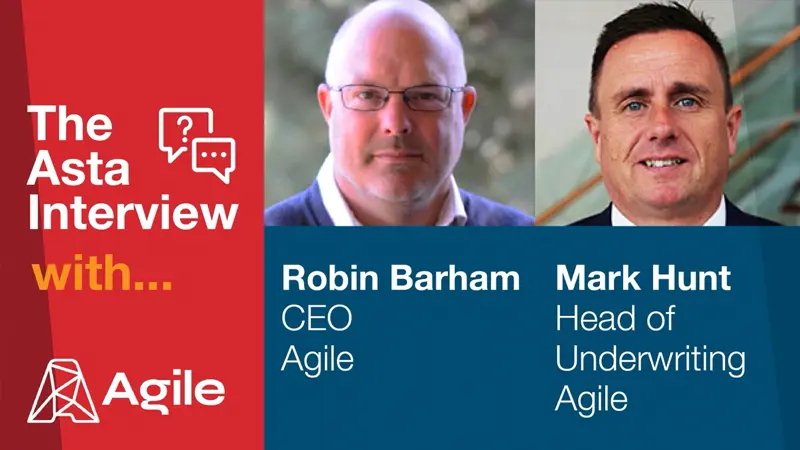

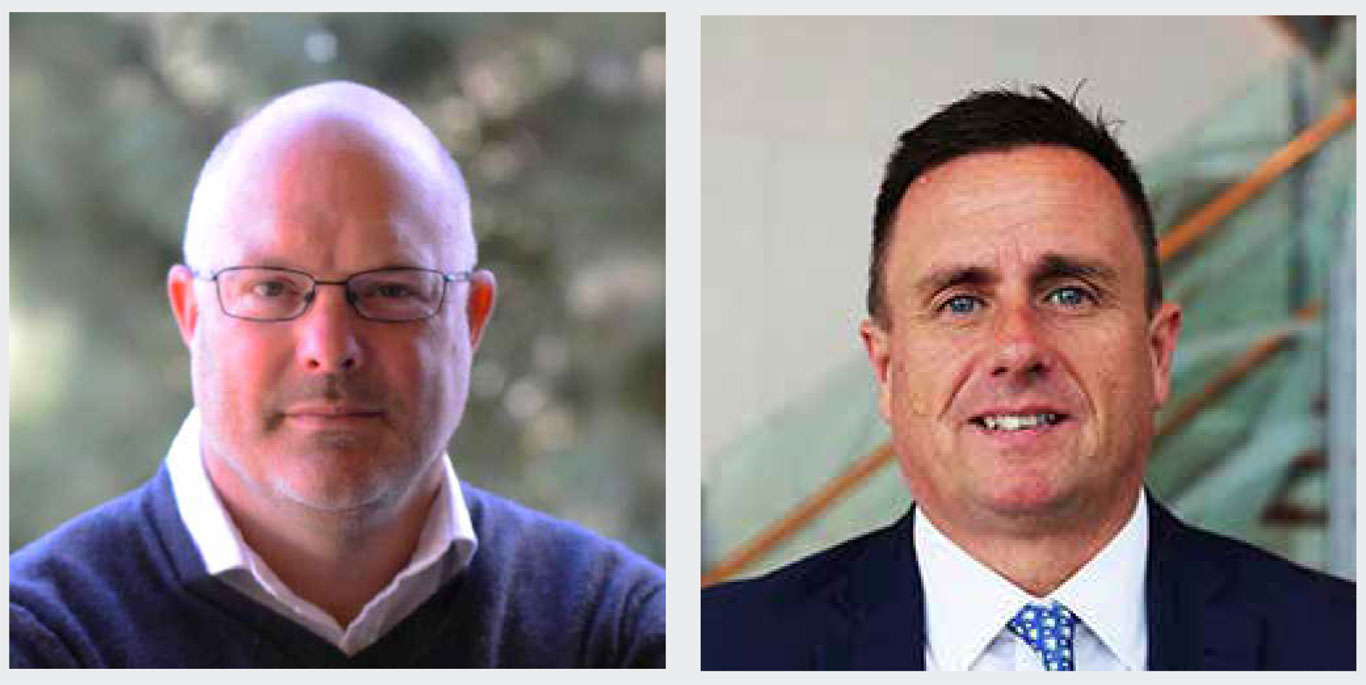
Robin Barham & Mark Hunt of Agile Underwriting

Over the past decade, Robin Barham and Mark Hunt have built Agile from its origins as a diversified MGA in Australia into a full-stack, multi-class underwriting business anchored in technology and local insight. Their latest milestone came in 2024 with the launch of Syndicate 2427 under the Lloyd’s Syndicate-in-a-Box (SIAB) initiative – a natural next step in the company’s evolution and part of a long-term strategy to transition to a full syndicate.
From day one, their vision has centred on scale, integrity, and flexibility: a multi-class underwriting platform supported by embedded InsurTech and deep underwriting expertise. Based in Australia and powered by custom-built technology, Agile delivers local, efficient access to SME and complex insurance markets underserved by traditional Lloyd’s operations. In this interview, Rob and Mark reflect on their journey so far, how the syndicate fits into their broader plans, and what’s next.
Q. Since launching in 2015, how has Agile’s business model evolved?
RB: Right from the start, we didn’t want to be a single-class MGA. We knew that model was vulnerable to capacity changes. If one carrier pulls out, your whole business is at risk. So, we launched as a multi-class MGA with aviation and marine in the first two months, then added financial lines quickly after.
We also always intended to be integrated – not just an MGA, but a group. We have built out our own retail broker, our own Lloyd’s broker, our own underwriting platform. The long-term goal was to own the whole value chain – from the retail client, through the distribution layer, underwriting, and capital. Launching the syndicate, even under the SIAB model, was the final piece of that.
Q. What was the strategy behind launching Syndicate 2427?
MH: Syndicate 2427 was launched through the Lloyd’s Syndicate-in-a-Box initiative, which gave us an accelerated path into the market without the upfront cost and complexity of a full syndicate. It’s a structure that fits our model well – lean, digital, and locally focused.
We had an established book of business – aviation, PI, property, marine – that we were writing through the MGA. That gave us a foundation of around 60% of the syndicate’s year one premium. Most new syndicates start from zero, so this put us in a very strong position.
The aim wasn’t to launch a side project – it was to begin a journey that leads to a full syndicate. We’ve always seen SIAB as a stepping stone to something more permanent and scalable within the Lloyd’s platform.

Q. What classes are you writing through the syndicate?
MH: We started with aviation, PI, property, and marine – all 100% underwritten by the syndicate. That gave us a diversified, balanced portfolio from day one.
Through the MGA, we still write SME lines using our broker platform. That allows us to serve smaller, high-volume risks efficiently, and keep our underwriters focused on the more complex end of the spectrum.
Q. What makes Agile different in a competitive market?
RB: Three things. First, our structure – we’re not just a syndicate or an MGA, we’re a group with every layer of the value chain. That gives us flexibility and control.
Second, we’re embedded locally. A lot of syndicates write international business but operate out of London. We’re on the ground in Australia and New Zealand, so we understand the market, the brokers, the culture. That’s a real advantage, especially for SME business.
And third, our tech. We built our own platform from day one. It’s not an off-the-shelf product. That means we can automate small-ticket underwriting, integrate with brokers, and keep our cost base low.
MH: Also, our people. We’ve brought together senior underwriters with long-standing relationships in the Lloyd’s market. We’re not a startup in that sense – we’ve got deep underwriting experience, and we focus a lot on trust and long-term relationships.
Q. How do you manage broker relationships?
MH: We’ve found that around 80–90% of our premium comes from the top 20% of brokers – the ones who are active, engaged, and aligned with our strategy. We therefore invest heavily in those relationships. We share data, meet regularly, and make sure we’re adding value.
For brokers who deal mostly with SME, we provide access to our platform. It gives them instant quotes, binding authority, and easy referrals. That helps us scale without losing quality.
Q. What role does technology play in the business?
RB: It’s core. We’re not trying to replace underwriters, but we are trying to automate what can be automated. Our platform handles simple risk submissions, quotes, referrals, and policy issuance. That frees up our underwriters to focus on complex risks and portfolio management.
We’ve just launched version two of the platform. It’s got real-time MI, automated bordereaux, and we’re integrating claims and finance functions too. Our finance team already uses AI to reconcile broker closings – we’ve done that for years. That kind of automation keeps us efficient and helps us scale without adding headcount.

Q. How do your roles complement each other?
MH: Rob and I work closely, but we’ve got different skill sets. Rob handles technology, operations, and strategy. I focus more on underwriting, regulation, and governance. That balance has worked really well.
Since launching the syndicate, our roles have evolved. We’ve had to shift our mindset from MGA execution to long-term capital stewardship. That’s a different discipline – and it’s required building new governance structures, new risk frameworks, and a much deeper engagement with stakeholders.
RB: We’ve also built out a strong leadership team across tech, finance, underwriting, and compliance. That’s allowed us to move quickly without losing sight of the details. Everyone knows their lane, and we’re aligned on the bigger picture.
Q. Was there concern about conflicts between the MGA and the syndicate?
MH: Yes – and we addressed it early. We made sure Rob stepped back from some governance roles where conflicts might arise. We also structured the underwriting so there’s no room for cherry-picking. Paper is allocated up front, so there’s no incentive to push risks one way or another.
Transparency is key. We’re very clear with our capacity providers about how we manage those relationships and how we divide responsibilities.
RB: Exactly. If you’re a capital provider yourself, you’ve got to hold yourself to a higher standard. Governance isn’t optional – it’s foundational.
Q. What have been some of the biggest challenges in building the syndicate — and what lessons have you taken from them?
MH: There’s a lot of complexity in aligning all the moving parts – governance, underwriting, capital management, reporting. You can’t underestimate the amount of work it takes to meet Lloyd’s standards while also building a business that’s commercially viable. The lesson has been to stay disciplined – keep your processes tight and your decision-making consistent.
RB: I’d say the challenge is balancing speed with precision. We’re wired to move quickly, but in a Lloyd’s environment you’ve got to slow down at times and make sure every box is ticked. That’s not a bad thing – it forces you to build systems and controls that will scale. It’s a different pace from the MGA world, but the discipline pays off.
Q. How has the relationship with Asta helped?
RB: Asta have been absolutely central to getting the syndicate to market – there’s no other way to say it. They took on all the infrastructure and regulatory setup so we could focus on what we do best: building the book, engaging brokers, and underwriting. Without their guidance and support throughout the SIAB application, structuring, and early-stage implementation, this wouldn’t have been possible.
From the start, we had a clear agreement on responsibilities – what they would handle and what we could take on over time. That clarity helped us stay focused and move fast. And as the syndicate has matured, they’ve supported us in gradually taking on more internal ownership of functions like finance, reporting, and governance. It’s been a true partnership.
MH: Asta brought the experience, the framework, and the operational capability to make this syndicate real. It’s one thing to have underwriting capability and a book – but bringing that into the Lloyd’s ecosystem takes deep expertise. Asta have been instrumental in that transition.
They’ve also acted as a steadying hand – giving us space to develop while making sure we always meet the expectations of the market. It’s not just about getting authorised; it’s about running a sustainable syndicate day-to-day. That’s where their input continues to be incredibly valuable.

Q. What have been the most rewarding milestones so far?
RB: Receiving the letter from Lloyd’s – formal approval – that was a big moment. So was writing the first line through the syndicate. Those are the tangible points where it hits you: “We built this.”
MH: It was the confidence shown by our capital providers. These are sophisticated partners, and for them to back us – after all the due diligence, market conversations, and scrutiny – was incredibly rewarding. That trust means everything.
Q. What keeps you up at night?
MH: Capital risk. My job is to protect it. My focus is on exposure management, coverage, rate adequacy – making sure we’re not taking on risks that could surprise us.
RB: For me, it’s governance and regulation. That’s why we brought in Matt Rowan. If you get compliance wrong, everything else can fall apart. We’ve always invested heavily in that space.
Q. What continues to drive you as you look ahead?
RB: Agile is all about building a business that we ourselves are proud to work for, and that makes the world a little better every day – something efficient, sustainable, and meaningful. I like solving complex problems, and I enjoy working with smart people who want to make insurance better. We’re not just trying to grow. We’re trying to build something that lasts.
MH: I’m driven by underwriting discipline and long-term performance. This is a trust business – brokers, capital providers, staff – they’re all putting their faith in us. I want to repay that trust by being consistent, by mentoring our team, and by proving that we can build a syndicate that performs for the long haul.
And yes – the goal is to graduate from SIAB to full syndicate. That’s the next step, and we’re focused on proving we’ve earned that progression.