
The Asta Interview with Callum Savage
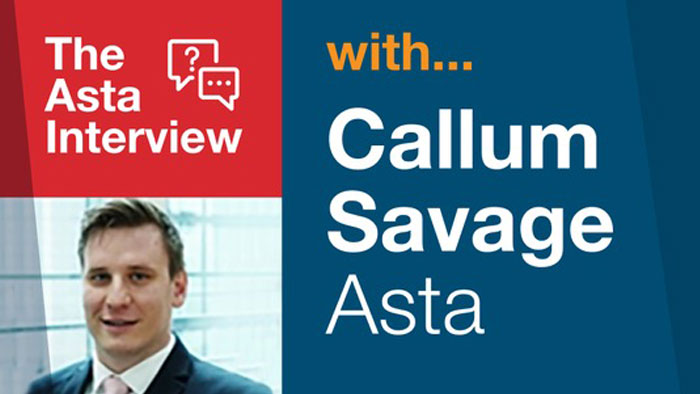


Head of Exposure Management

In a career spanning over 13 years, Callum brings extensive experience and a deep understanding of how global events such as natural disasters, economic downturns, and technological advancements impact exposure management. In this latest Asta Interview, we explore key trends like the growing focus on secondary perils, regulatory changes, and the integration of AI and other technologies that enhance risk assessment and management processes. Callum also shares his insights on the evolving role of exposure management, highlighting its shift from operational to strategic importance, and discusses how his dynamic team adapts to these changes.
Q. Can you describe the current risk landscape for the insurance industry? What are some of the biggest challenges you see in terms of exposure management?
CS. The current risk landscape is incredibly dynamic. Traditional threats like natural catastrophes (Nat Cats) remain ever-present However, climate change has the potential to alter the frequency and severity of these events, both globally and locally, and there's been a noticeable increase in losses from non-peak perils, more widely known as secondary perils, such as severe convective storms, which have been historically underemphasised in pricing and portfolio management. Last year, for example, there were no sizable US windstorm events. Coupled with a record-setting US industry loss for severe convective storms, the focus has naturally shifted to the perils driving the losses, the risks which are being written, the classes of business involved and whether insurers have the appetite for their current levels of risk.
We must also continually adapt in both the short and long term. For instance, early forecasts indicate a very active upcoming hurricane season in the North Atlantic. Historical data from 2020, a year with six landfalling hurricanes, albeit in lower exposure areas, helps guide our analysis of potential modelled losses for this season, which should be influencing our risk perceptions and challenging our appetites accordingly.

The rise of significant cyber threats, political instability and social inflation are also complicating exposure management and we’re contending with changes in regulatory focus, which has significantly impacted workloads for exposure management teams. For instance, the move from Lloyd’s minimum standards to principles-based oversight has fundamentally changed market expectations and how we approach exposure management.
Q. Regarding the changes in oversight and reporting to Lloyd's, can you elaborate on what is now required?
CS. Previously, the Lloyd’s regime was high level and prescriptive, focusing on minimum standards. Now, it’s much more outcomes-focused, governed by 10 separate sub-principles concerning model usage, exposure control, and the tools used for monitoring and reporting. The number of touchpoints has increased, and the expectations have shifted from basic compliance to a more sophisticated, proportionate approach depending on the materiality of what a syndicate’s book of business is.
Q. How have recent events like economic downturns, natural disasters, and cyber threats impacted your approach to exposure management?
CS. Events like the pandemic and major cyber-attacks have forced us to refine our approach rather than change it fundamentally. At Asta we've increased our focus on stress testing and refined our view of catastrophe models and their ability to reasonably assess potential losses. Our framework continues to prioritise risk identification, assessment, and monitoring, employing both quantitative and qualitative methods.
The rise in losses from traditionally "non-peak" natural perils has led to increased emphasis and scrutiny on the regions where they occur, ensuring loss experience is incorporated and that models accurately reflect the risk. We're also focusing more on scenario testing due to greater market uncertainty. Recent additions include scenarios for financial lines, potential dam collapses in California, and the impacts of atmospheric river storm sequences on our clients' portfolios. Strikes, riots and civil commotion are our next area of focus.
Q. What’s the impact of AI and technological advancements in exposure management?
CS. AI and technological advancements are enabling more precise and dynamic risk assessments. For example, AI not only enhances scenario simulations and predictions but also optimises tasks like data cleansing and formatting, which were previously time-consuming. Additionally, blockchain and IoT (Internet of Things) devices are improving efficiency in operations such as claims processing and real-time data collection.
Machine learning algorithms allow us to detect subtle patterns and trends, leading to more accurate risk assessments and pricing models. Meanwhile, IoT technology has made tracking previously challenging classes of business, like maritime and aviation, straightforward, facilitating real-time portfolio assessments.
These technologies are automating routine tasks, freeing up human expertise for complex activities like strategic decision-making. However, while these advancements bring numerous benefits, they also introduce new challenges that require careful management.
Q. How do you integrate innovative technologies at Asta, and how do they affect your strategies?
CS. At Asta, we're quite proactive about integrating technologies into our operations. This involves both adopting existing solutions and developing custom tools tailored to our specific needs. We particularly focus on technologies that enhance data analysis and automate data collection, which significantly improves our decision-making capabilities. We’re exploring technologies like predictive analytics to help us manage risks more effectively and strategically.
Q. Can you describe how Asta’s unique business model affects your approach to exposure management?
CS. While we primarily provide oversight rather than direct management, our framework must remain dynamic to accommodate the varying needs of our clients. Our exposure management framework employs a multi-layered strategy that ensures a comprehensive view of risk, albeit from a step removed compared to a traditional, first party managing agent.
The core elements of our approach are broadly similar, but our risk profile is typically much more dynamic as new clients join or rapidly growing syndicates diversify their business. We start by using a mix of industry trend analysis, horizon scanning, and scenario planning to spot potential risks and we then assess how likely they are to happen and how severe they could be, not just at the managing agency level but also for each client. This helps us figure out which areas need the most attention and we work closely with syndicates to understand their risk tolerance and develop strategies to either mitigate or sidestep these risks. We keep a keen eye on how well our clients' exposure management frameworks are performing by tracking key risk indicators, reviewing portfolio results, and conducting regular audits. This continuous monitoring helps us stay proactive and responsive to the evolving risk landscape.
Q. You’ve been working at Asta for 5 years. What changes have you seen in your role during that time, and what changes do you expect to see in the future?
CS. My role at Asta has evolved significantly, expanding from overseeing a handful of predominately Nat Cat focussed syndicates to 18 currently, with a broad range of classes of business and threats. Asta's environment is quite different from that of a typical managing agent, offering a broader, more strategic perspective. While the pace of change has always been fast, recent developments – especially in regulatory frameworks and emerging risks – have necessitated an even more dynamic approach to exposure management.
Looking ahead, I believe exposure management will increasingly become a strategic rather than purely operational function. This evolution will involve a greater focus on integrating advanced analytics, real-time data, and automated systems into our daily operations. As risks become more complex and interconnected, the ability to not only react to but also anticipate and adapt to changes will be crucial. This will likely lead to a more proactive role in corporate strategy, influencing everything from product development to corporate risk tolerance and investment decisions.
Q. Tell us about your team
CS. Our team comprises four key members, each with expertise in both traditional and emerging risks. Henry Guckian focuses on non-natural catastrophe risks, like cyber and liability, which are increasingly significant in our portfolio. Luke Hole, who joined last summer, handles our natural catastrophe modelling and assessment. Both have quickly become integral to our operations, enhancing our ability to expand capabilities and improve client services. Their diverse skill sets, coupled with my strategic oversight, foster a dynamic team environment. We maintain open communication through regular catch-ups, ensuring we stay aligned and responsive to any emerging challenges.

The 4th member of the team is Lisa Dabbs. Lisa plays a versatile role, helping across various aspects of our work as needed. Her flexibility helps us adapt to changing client demands and maintain scalability. This adaptability is essential as we continue to grow and attract new clients without compromising on quality or efficiency.
Q. There is much talk about the war for talent in the insurance industry. Is this a concern for the world of exposure management?
CS. My biggest concern regarding exposure management over the next 5-10 years is the rapid expansion of the field in the last decade and the potential impacts as the first cohort of exposure managers and heads of exposure management retire. The rapid growth in headcount, responsibilities, and regulatory changes has fostered a short-term mindset among insurers, focusing on filling roles rather than providing comprehensive training. This training should challenge assumptions, enhance process understanding, and expand knowledge beyond merely running models.
While some individuals exceed expectations, I am concerned about a bifurcation of skills that could negatively impact the industry in the long term. The industry needs skilled professionals who can understand complex risks and develop innovative solutions. Attracting, retaining, and upskilling top talent remains a significant challenge.
Q. What advice do you offer to aspiring professionals in exposure management?
CS. For those starting out, it’s vital to grasp both the theoretical foundations and practical applications of risk management. Stay abreast of technological advancements and incorporate them into your toolkit. Also, never underestimate the power of good communication and strategic thinking skills—they’re key in translating complex data into effective strategies. Keep learning, stay curious, and be proactive – these traits will serve you well in this ever-evolving field.
Q. What do you do in your downtime?
CS. My time off is largely family-focused – I have two young children, a three-year-old boy and a six-year-old girl, who take up most of my free time. We enjoy lots of activities together, from playing games to practicing nail art – I’ve become quite the expert on painting hearts and flowers on my daughter’s nails.
My wife and I have recently each started a huge paint by numbers picture which we spend every Wednesday evening filling in and I quite enjoying building detailed Lego sets. Both require enough focus to allow me to switch off the part of my brain that is constantly thinking about insurance.
I’m also a big sports fan, following Tottenham Hotspur, Green Bay Packers and Formula One racing. It’s these moments of personal downtime that recharge me for the challenging work we do at Asta.
